
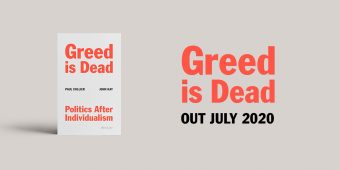
Tag: fiscal policy
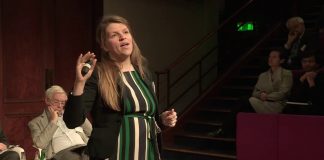
IFS at 50: The Future of Tax
John spoke as part of a panel at one of the Institute for Fiscal Studies' 50th anniversary celebrations. You can watch a...

The basics of basic income
Basic income schemes cannot work and distract from sensible, feasible and necessary welfare reforms.

The fallacy of helicopter money
The term “helicopter money” is derived from a vivid image created by the US economist Milton Friedman in which a central banker showers notes on a grateful populace. More recently, the notion has been promoted by Adair Turner, the former chairman of the UK financial regulator, in his book, Between Debt and the Devil .
Our tax system needs purposeful change, not tinkering
George Osborne has, it is reported, abandoned plans for root-and-branch reform of the taxation of pension saving and will content himself with tinkering with rates of relief. However, what's really needed in our tax system — as in so many other areas of political life — is purposive change: reforms may well be implemented in piecemeal fashion but should be motivated by a sense of strategic direction.
Look behind the fiscal tree but don’t expect to find any...
There is plenty of tax waste and avoidance — but if eliminating them was painless, it would have happened. However, one need not believe in pots of gold behind the tree to be concerned. Tax is a moral issue, and paying it demonstrates a sense of shared values of importance to economic and social life in the modern state.
It sometimes makes sense to fix the market rather than its...
The 2015 election was an almost unmitigated disaster for the UK Labour party. Yet there was one significant success — an intellectual one. It's called "predistribution". And it has already been put to use by the new Conservative administration with a 40% increase in the minimum wage.
The best answer to the West Lothian question is to ignore...
The logic of English votes for English laws is irresistible. But the core issue is that it is genuinely difficult to identify purely English matters in a United Kingdom of which England constitutes 85 per cent of the population.
Public debt and the more subtle ways we risk cheating future...
Two decades ago, the American economist Laurence Kotlikoff proposed a structure of “intergenerational accounting” to enable us to better understand the ways in which our actions today impinge on the welfare of generations to come. Only if we develop and broaden that framework can we start to address the question Roche put to his fellow parliamentarians 350 years ago.
The welfare cap replaces political judgment with spin
Whatever initial misconceptions spin doctors may promote, reality will out.
Scottish independence matters less than you think
The centre of political gravity in Scotland is far to the left of that of the UK and that is at the centre of the concerns – widely held but little expressed – of Scottish business over independence.