Tag: Fallacies

A good example of economics done properly
This article entitled "We Know What Causes Trade Deficits", by Joseph Gagnon at the Peterson Institute for International Economics, is a good of example...

The basics of basic income
Basic income schemes cannot work and distract from sensible, feasible and necessary welfare reforms.
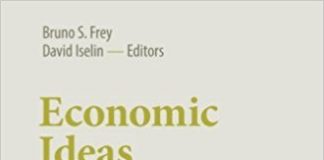
Economic Ideas You Should Forget: The Axioms of Revealed Preference
John's contribution to this book, published by Springer in March 2017.
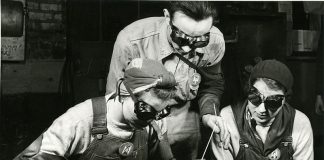
The economics and politics of manufacturing fetishism
As politicians vie with each other to express their love of manufacturing industry, John pulls together thoughts developed over three decades on what he has come to call the 'manufacturing fetish'.
Simple arithmetic shows why basic income schemes cannot work
Swiss voters will decide in a referendum on June 5 whether to introduce a “basic income”. In proposed reforms to the social welfare system, all residents would be entitled to a guaranteed income of SFr30,000 ($30,275) a year from the state — unconditionally. It has attractions for people at both ends of the political spectrum, but is it workable?

No savings glut, investment opportunities abound
The belief that the zero lower bound to interest rates is a significant obstacle to stimulating demand supposes that there is a host of projects that promises a prospective return less than zero but more than, say, minus one half per cent. This completely misunderstands the nature of the barriers to long-term productive investment. We need less financial ingenuity and more common sense.
Trade debate in EU referendum should focus on UK as world...
Britain has a trade surplus in almost every service sector except tourism. As a result, world trade negotiations have not played to British strengths because advanced economies tend to trade freely in manufactures but retain home-country bias in their purchases of services. This should frame any debate on trade in the EU referendum.
Famous quotes may be apocryphal yet illuminating
Even if Keynes’s last words were not regret “at not having drunk enough champagne”, the story tells us something true about the man. Well chosen phrases gain currency not by virtue of their provenance, but because they meet the (accurately quoted) requirements of Alexander Pope: “What oft was thought, but ne’er so well express’d”.
Lower business rates would benefit property owners not retailers
Retailers have recently complained about the level of business rates. However, were this property tax is reduced their joy will be short lived. Business rates are both a tax on land and a tax on structures, and in the longer term all we would see is higher property values and rents, especially in prime locations.
Beware “mathiness”: The use of algebra and data to reinforce ideological...
It is characteristic of science to give precise meaning to concepts and the basis of their measurement. Economics is genuinely harder. Yet it is all too easy to write a mathematical symbol without giving thought to what observable fact in the real world corresponds to that symbol.