

Tag: Advantage


The purpose of the corporation
Listen to John's keynote speech at the Creating Sustainable Companies Summit (Brussels, September 2016).
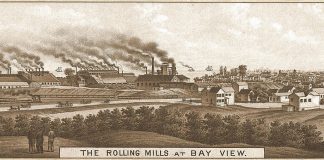
The changing – and unchanging? – nature of the company town
The decline of manufacturing industry had been associated with the decline of the company town. In contrast, service companies have always tended to be fragmented. And yet there is one service industry which is conducted in large plants, in which people travel hundreds or even thousands of miles to consume the product, and which has been conducted in company towns not just for decades, but centuries.
Berkshire business model is simple and effective, yet rarely copied
Buffett's method is to find well-run companies and give them more freedom than they would enjoy on public markets. Yet other conglomerates use financial engineering and impose “transferable” management skills.
Trade debate in EU referendum should focus on UK as world...
Britain has a trade surplus in almost every service sector except tourism. As a result, world trade negotiations have not played to British strengths because advanced economies tend to trade freely in manufactures but retain home-country bias in their purchases of services. This should frame any debate on trade in the EU referendum.
HBOS report yields three important lessons for all businesses
British regulators have finally published their report into HBOS, the bank formed from the merger of Halifax with Bank of Scotland, more than seven years after its collapse. The 600-odd pages contain much detail on events and personalities. But there are general lessons for all businesses. Avoid the diversifier’s fallacy. Beware the winner’s curse. Fear adverse selection.
Let’s challenge our fixation on the principle of one share, one...
The Savoy Group and Google both adopted share structures that give individuals disproprtionately greater voting rights than their diverse set of shareholders. It has worked well for these companies and their investors over the long run. Perhaps we should reopen the debate over share structures?
Taxi apps should be hailed for breaking the cabby cartel
Taxi licensing illustrates regulatory capture, the phenomenon by which regulation intended to serve the public is hijacked by industry interests.
The Co-op’s mistake was to detach responsibility from power
The test of an organisational structure is not how it handles success but how it copes when things go wrong.
The startling human progress that economists fail to see
The most important source of economic advance comes not from doing the same things better, but from achieving the same objective in a completely different way.
Currency unknowns weigh on an independent Scotland
Whatever Mr Salmond may say, there has to be a plan B.